
Offset Smoker Buying Guide: What to Look For
How to buy an offset smoker: chamber size by cook volume, steel thickness, reverse flow vs standard, and picks by budget tier from backyard to competition.
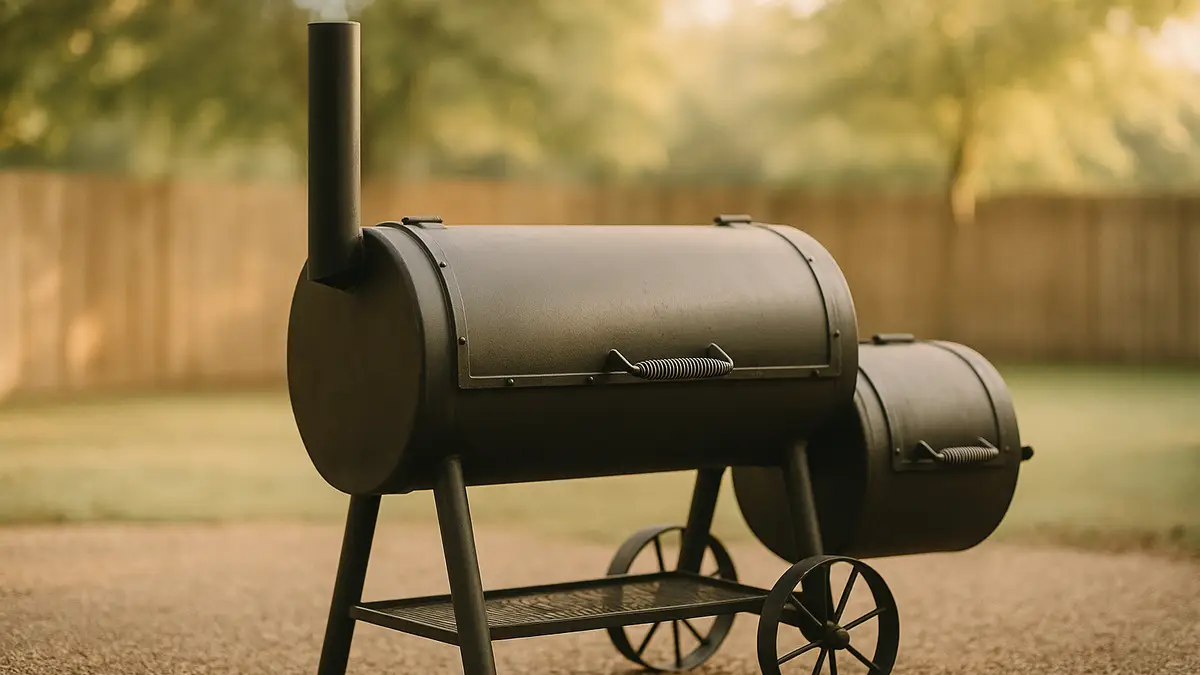
An offset smoker looks simple: a horizontal steel drum with a firebox welded to one end. The differences that actually matter, steel thickness, chamber size, and airflow design, are the ones budget models cut corners on first. Here’s what to check before you buy.
What is an offset smoker?
An offset smoker is a horizontal cooking chamber with a separate firebox attached to one side, where wood or charcoal burns and smoke travels the length of the chamber before exiting through a chimney on the far end. That long smoke path is what builds a deep bark and pronounced smoke ring, and it’s also why offsets demand more hands-on fire management than any other grill type.
What chamber size do you actually need?
| Chamber size | Capacity | Best for |
|---|---|---|
| Small/backyard | Under 500 sq in | 1-2 briskets, occasional cooks |
| Medium | 500-800 sq in | Regular backyard cooking, feeding a crowd |
| Large/competition | 800-1,200+ sq in | Competition volume, large gatherings |
Buy for your typical cook, not your biggest one. A small chamber run at capacity every weekend will feel cramped fast, but a large chamber run half-empty wastes fuel, since more empty steel means more heat lost to the metal itself rather than the meat.
Does steel thickness really matter?
More than almost any other spec. Thin steel, common on offsets under $500, heats up fast but also loses heat fast, which means constant fire feeding to hold a steady temperature in any wind or cold. Steel at 1/4 inch or thicker acts like a heat sink: it takes longer to come up to temperature but holds it far more evenly once there, which is the difference between checking your smoker every 20 minutes and every 45. If you’re serious about smoking regularly, thicker steel is worth paying for over a bigger chamber.
Standard offset vs reverse flow: which should you buy?
A standard offset has an obvious hot spot near the firebox end and a cooler zone near the chimney, a 50-75F swing across the chamber that experienced pitmasters actually use (searing near the firebox, low-and-slow further away). A reverse flow offset routes smoke under a steel baffle plate first, evening out that gradient so the whole chamber cooks closer to the same temperature. Reverse flow is easier for beginners; standard offset gives more control once you understand your unit’s hot zones.
What should you expect to pay?
Budget ($400-700): Entry offsets from Char-Griller and Oklahoma Joe’s Highland cover small-to-medium chambers with thinner steel. Who this tier is not for: anyone in a cold or windy climate who’ll fight temperature swings constantly, or anyone planning to smoke every weekend for years, where thin steel wears out faster.
Mid-range ($700-1,500): Thicker steel, better door seals, and medium-to-large chambers show up here, often from Oklahoma Joe’s higher lines and Char-Griller’s competition series. This tier suits the backyard upgrader who smokes regularly and wants a unit that will last a decade.
Premium/competition ($1,500-3,000+): Yoder Smokers, Lang, and Horizon build heavy-gauge steel offsets, often reverse flow, in medium to large-competition chamber sizes. Who this tier is not for: anyone smoking a handful of times a year, where the build quality premium goes mostly unused.
What else should you check before buying?
Look at the firebox door and main chamber door seals, gaps let heat and smoke escape and force more fuel use. Check for a good thermometer placement (grate-level, not lid-level, since lid thermometers read hotter than the actual cooking surface). And check wheel and handle quality if you’ll be moving the unit, offsets get heavy fast once chamber size passes 500 sq in.
How much does firebox size affect performance?
A small firebox forces smaller wood splits and more frequent feeding, often every 30-45 minutes, while a larger firebox holds bigger splits and stretches feeding intervals out. Budget offsets sometimes pair an undersized firebox with a large main chamber to hit a bigger headline square-inch number, which looks good on a spec sheet but means you’ll be feeding the fire constantly to keep a large chamber hot. Check firebox volume relative to chamber size, not chamber size alone, and look for a firebox with its own damper for direct airflow control separate from the chimney damper.
What about charcoal vs wood splits as fuel?
Most offset owners run a charcoal base (briquettes or lump) with wood splits added for smoke, rather than an all-wood fire, since charcoal holds a more consistent coal bed and splits alone can spike and dip in temperature. A full chimney holds about 100 briquettes and is ready to dump into the firebox in 15-20 minutes, a useful baseline for your first few cooks while you learn how your specific unit holds heat.
What do you do once you own one?
Every offset needs seasoning before its first real cook (a light oil coating burned in at high heat to protect bare steel from rust) and a wipe-down routine after every use. Our offset smoker seasoning and maintenance guide covers that full routine. You’ll also want a wood or charcoal source dialed in early; our best smoker wood pellets guide covers wood choice by meat type, useful even if you’re burning splits rather than pellets.
If you’re still weighing an offset against a pellet grill or kamado rather than committed to the category, back up to our full kamado vs offset vs pellet vs gas comparison, or read the pellet grill vs smoker breakdown if convenience is pulling you toward pellet instead.
Frequently asked questions
Quick answers to what readers ask us most
What size offset smoker do I need?
For a household smoking occasionally, under 500 sq in (1-2 briskets at a time) is plenty. Regular backyard cooks or anyone feeding a crowd should look at 500-800 sq in. Competition or large-gathering cooking needs 800-1,200+ sq in.
Is a thicker steel offset smoker worth the extra cost?
Yes, if you'll use it often. Thin steel (under 1/8 inch) loses heat fast in wind and cold, forcing constant fire adjustments. 1/4 inch steel or thicker holds temperature far more evenly, which matters most on long cooks.
What's a reverse flow offset smoker?
A reverse flow design routes smoke under a steel baffle plate along the bottom of the chamber before it rises back over the meat, which evens out the hot-to-cool temperature gradient standard offsets have from firebox end to chimney end.
Do I need a offset smoker if I already have a pellet grill?
Only if you specifically want more intense real wood smoke or more chamber capacity than your pellet grill offers. See our pellet grill vs smoker comparison before buying a second cooker.