
Best Grill Buying Guide by Budget and Fuel Type
A grill buying guide organized by what you'll actually spend: budget, mid-range, premium, and built-in, with picks and who each tier is not for.
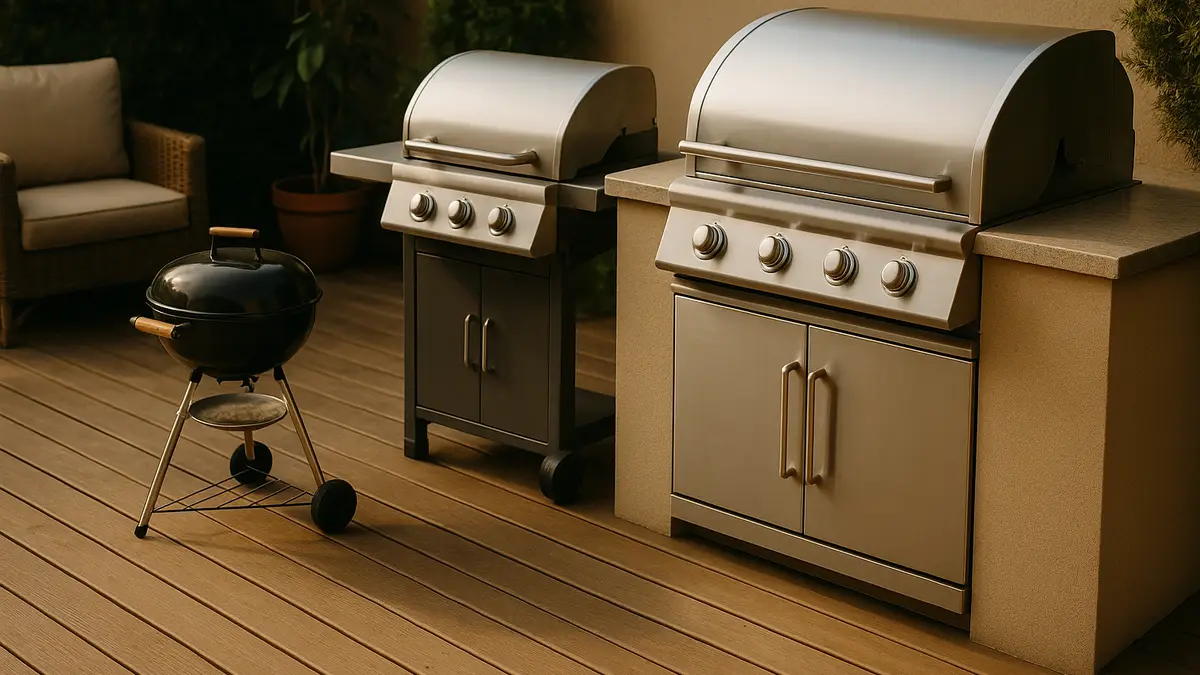
Most grill shopping starts with a budget, not a fuel type. You know you can spend $500, or you know the built-in island is a $4,000 project, and you need to know what that money actually buys. Here’s the buying guide organized the way people actually shop: by price tier first, with fuel type and picks layered in underneath.
How much does a grill actually cost?
| Tier | Price band | What you get |
|---|---|---|
| Budget | Under $300 | Compact 2-burner gas or basic kettle charcoal |
| Mid-range | $300-$800 | Full-size gas grills, better kamados, entry offset smokers |
| Premium | $800-$2,000 | Standard/large kamados, quality pellet grills, full-feature gas |
| Luxury/built-in | $2,000+ | Outdoor kitchen islands, high-end brand gas grills |
A grill is a cooking appliance defined by its fuel source and heat delivery, and price inside each tier mostly buys thicker steel, better burners, and longer warranties rather than a fundamentally different cooking result.
What should you buy under $300?
At this price, gas is your best option: a solid 2-burner cabinet-style gas grill from Char-Broil or Weber’s entry Spirit line covers weeknight grilling for one to four people. A basic Weber kettle is the charcoal equivalent and arguably the better dollar-for-dollar cook, since a kettle’s simple design has almost nothing to break. Our best budget grills under $300 guide runs the full list. Who this tier is not for: anyone planning to smoke low and slow regularly, since budget units rarely hold steady low temperatures well.
What does $300-800 get you?
This is where most households land, and for good reason. A 3-4 burner gas grill from Weber Genesis or Napoleon in this range has real cooking area (400-600 sq in), better temperature consistency, and a lid that seals properly. It’s also where entry kamados (13-19 inch grate) and beginner offset smokers show up. Who this tier is not for: anyone who wants a true competition-capacity offset chamber (800+ sq in) or an XL kamado, both of which push past $1,000.
Is $800-2,000 worth it over mid-range?
Yes, if you’ve identified a specific need. This tier covers standard-to-large kamados (18-19 inch, feeding 4-8 people), quality pellet grills with 18-20 lb hoppers, and gas grills with better burners, rotisserie kits, and side burners built in. It’s the sweet spot for the competition-curious enthusiast persona: enough capacity and build quality to actually compete in a local cookoff without built-in-island money. Who this tier is not for: casual weekend grillers who’d never notice the difference from a $500 unit.
When does a built-in island make sense?
Once you’re spending $2,000 or more, you’re usually not buying a grill anymore, you’re buying an outdoor kitchen. Built-in islands set a grill into a permanent stone or stainless cabinet, often with a side burner, storage drawers, and sometimes a sink. This tier is squarely for the outdoor-kitchen remodeler persona with $2,000-8,000+ to spend on a permanent patio fixture, not a portable appliance. Our best built-in grills guide covers what separates a good island grill from an expensive box. Who this tier is not for: renters, anyone who might move within a few years, and anyone without the patio space or budget for permanent construction.
Gas, charcoal, kamado, pellet, or offset: which fuel fits your budget?
Fuel type and price tier interact more than most guides admit. Gas dominates the budget and mid-range tiers because burners are cheap to manufacture. Kamados and pellet grills cluster in the premium tier because their materials (ceramic, thick steel, digital controllers) cost more to build. Offset smokers span an unusually wide range, from a $400 backyard unit to a $3,000+ competition rig, because chamber size and steel thickness scale directly with price. For the full head-to-head on which fuel type fits your cooking goals rather than your budget alone, see kamado vs offset vs pellet vs gas.
How much cooking area do you actually need?
Cooking area matters more than sticker price for day-to-day satisfaction. A household of one or two people rarely needs more than 300-400 sq in of primary cooking surface, which most budget and mid-range gas grills already provide. Families of four to six should look for 450-600 sq in, standard on mid-range and premium 3-4 burner units, so a full meal fits without cooking in batches. Anyone hosting regularly, or feeding the competition-curious crowd, should size up further: a large kamado (18-19 inch grate) or a premium gas grill with a warming rack effectively adds another 100-150 sq in of usable space. Buying more capacity than you need mostly costs you propane and patio space, not performance, so size to your typical cook, not your biggest party of the year.
Does brand matter as much as price tier?
Less than most shoppers assume. Within a price tier, Weber, Napoleon, Char-Broil, and Traeger (for pellet) compete closely on build quality, and the honest differences show up in warranty length, parts availability, and finish details rather than how food actually cooks. Where brand matters more is at the premium and luxury tiers, where names like Kamado Joe, Big Green Egg, and the high-end built-in brands (covered in our best high-end grill brands roundup) carry real differences in materials and resale value. At the budget tier, buy on cooking area and burner count first, brand name second.
What should you buy alongside your grill?
A fire pit rounds out most backyard setups and runs on its own separate budget and buying logic (size, BTU output, fuel), covered in our gas fire pit buying guide. If you already know your fuel type and just need the specific model list for your budget tier, jump straight to the linked guide above rather than reading this one twice.
Frequently asked questions
Quick answers to what readers ask us most
How much should I spend on my first grill?
$300-800 covers a genuinely good gas or charcoal grill that will last years with basic care. Going lower means thin steel and short-lived burners; going higher only makes sense once you know you want a specific feature, like a kamado's smoking range.
Is a more expensive grill always better?
No. Above roughly $800, extra money buys build materials (cast aluminum, thicker steel, ceramic), not necessarily better cooking results. A $400 gas grill and a $1,800 gas grill can produce a nearly identical burger; the expensive one just lasts longer and looks better doing it.
What's the difference between a grill and an outdoor kitchen island?
A grill is a standalone appliance. A built-in island is a grill (often the same models sold standalone) set into a permanent cabinet, usually with counter space, storage, and sometimes a side burner or sink. See our best built-in grills guide.
Should I buy a grill and a fire pit at the same time?
If your patio budget covers both, yes, since they serve different seasons and occasions. Our gas fire pit buying guide covers sizing and fuel choices separately from grill shopping.