
Best Pellet Grill vs Smoker: Which Wins in 2026?
Pellet grills compared against dedicated smokers on flavor, convenience, and price, plus the best pellet grill and pellet smoker picks by budget tier.
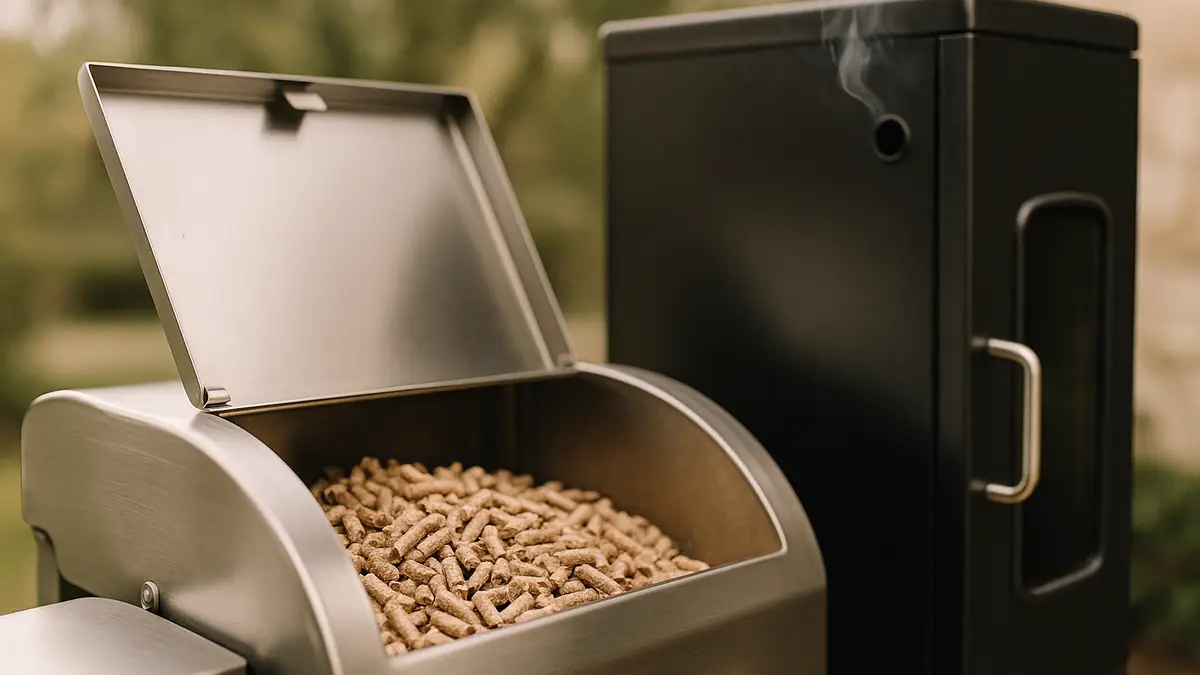
“Pellet grill” and “smoker” get used interchangeably online, but they’re not the same purchase. A pellet grill grills and smokes in one open-grate unit; a dedicated smoker (cabinet or offset) exists only to smoke, usually with more capacity and more real wood contact. Here’s which one actually fits how you cook.
What is a pellet grill, exactly?
A pellet grill is a hopper-fed cooker that burns compressed hardwood pellets through an auger into a firepot, with a digital controller holding the chamber at a set temperature automatically. It cooks like an oven with real wood smoke: load pellets, set a temperature, walk away. Most pellet grills also sear reasonably well at high settings (400-500F), making them a genuine do-everything grill rather than a smoking-only appliance.
What counts as a dedicated smoker?
A dedicated smoker is a cooker built exclusively for low-and-slow cooking, either a vertical cabinet-style pellet or electric smoker, or a wood/charcoal-fed offset with a separate firebox. These give up direct-heat searing entirely in exchange for more usable rack space per dollar and, on offsets specifically, more intense real wood smoke since the fire isn’t automated. Our offset smoker buying guide covers that category in full.
Pellet grill vs smoker: full comparison
| Factor | Pellet grill | Dedicated smoker (cabinet/offset) |
|---|---|---|
| Smoke intensity | Moderate, consistent | Stronger on offset, milder on cabinet |
| Searing ability | Yes, up to 400-500F | Limited to none |
| Hands-off operation | Yes, automatic controller | Cabinet: mostly. Offset: no |
| Typical price | $400-2,000 | $300-3,000+ |
| Power needs | Requires electricity | Charcoal/wood: none. Electric cabinet: yes |
| Best for | One grill that does both jobs | Dedicated smoking, higher volume |
How much pellet grill capacity do you actually need?
Hopper size determines how long you can cook unattended, and it’s the spec that matters most day to day. A small hopper (10-15 lb) runs roughly 10-15 hours at 225F before needing a refill, enough for most single-cut cooks. A mid hopper (18-20 lb) covers an overnight brisket with margin. A large hopper (22-40 lb) is built for genuine overnight or competition cooking where refilling mid-sleep isn’t an option. Match hopper size to your longest typical cook, not your average one.
Which is the better buy for a beginner smoker?
A pellet grill, for most people. The controller removes the single hardest skill in smoking (holding a steady low temperature for hours), which is exactly where beginners fail on an offset. You give up some smoke intensity and the ability to say you “ran a real fire,” but you gain consistent results on your first several cooks. If you’re shopping specifically for a portable unit for camping or tailgating, our best portable pellet grills guide narrows that down separately.
Who should skip the pellet grill and go straight to a dedicated smoker?
Anyone who has already smoked on a pellet grill for a season and wants more: more smoke intensity, more rack space for competition-volume cooks, or the specific satisfaction of managing a real wood fire. An offset also makes sense if you’re regularly cooking for 15-20+ people, where the large chamber sizes (800-1,200+ sq in) common on offsets outpace what most pellet grills offer. Who a dedicated offset is not for: anyone without 45 minutes free every half hour during a cook to feed the fire and read smoke color.
What about pellet quality?
Both pellet grills and pellet cabinet smokers depend entirely on pellet quality, since low-fill or filler-heavy pellets burn inconsistently and can gum up an auger. Stick to 100% hardwood pellets from a known brand, and match wood type to meat (hickory and oak for beef, fruit woods for pork and poultry). Our best smoker wood pellets guide covers picks by meat type and consumption math so you’re not guessing at bag count for a long cook.
Best pellet grills and smokers by price tier
Budget ($400-800): Entry pellet grills from Pit Boss and Z Grills cover the basics, a working controller, a mid-size hopper, and enough grate space for a family cook. Who this tier is not for: anyone chasing tight temperature consistency in cold or windy weather, since budget controllers hunt more than premium ones.
Mid-range ($800-1,500): Camp Chef Woodwind and mid-tier Traeger models add better insulation, larger hoppers (18-20 lb), and more consistent temperature holding across a full cook. This is the tier most serious home cooks land in. Who this tier is not for: buyers who genuinely need overnight, unattended cook times past 15 hours, where hopper capacity still runs short.
Premium ($1,500-2,000+): Traeger Ironwood and Timberline lines, along with Recteq’s larger models, add app connectivity, larger hoppers (22 lb+), and thicker steel construction that holds heat better in cold weather. Who this tier is not for: casual cooks who smoke a handful of times per season, where the extra cost buys features you won’t use often enough to justify.
Dedicated cabinet smokers ($300-1,200): Electric or pellet cabinet smokers from Masterbuilt and similar brands trade searing ability entirely for vertical rack space, often fitting several racks of ribs or multiple pork butts at once. Who this tier is not for: anyone who wants one grill for both weeknight cooking and weekend smoking, since cabinet smokers can’t sear.
If you’re still deciding between fuel types more broadly, not just pellet vs dedicated smoker, the full kamado vs offset vs pellet vs gas comparison lays out where charcoal and gas fit into this decision too.
Frequently asked questions
Quick answers to what readers ask us most
Is a pellet grill as good as a real smoker?
For flavor, it gets close: real wood pellets produce genuine smoke, just milder than a wood-fed offset. For capacity and hands-off convenience, a pellet grill often wins outright, since its controller holds temperature automatically for hours.
What's the difference between a pellet grill and a pellet smoker?
A pellet grill has an open grate and can sear at high heat as well as smoke low and slow. A dedicated pellet smoker (cabinet-style) is built only for smoking, usually with more vertical rack space and less direct-heat searing ability.
How long does a bag of pellets last?
Expect roughly 1-2 lb of pellets burned per hour at 225-250F, so a 20 lb bag covers 10-20 hours of cook time depending on weather. See our best smoker wood pellets guide for buying by the bag versus bulk.
Do pellet grills need electricity?
Yes. The auger, igniter, and fan all run on standard household power (or a generator), which is the tradeoff for automatic temperature control. A power outage mid-cook stops the fire, unlike a charcoal kamado or offset.