
Kamado Grill Buying Guide: Sizes, Materials, Price
How to size a kamado grill by grate diameter and headcount, ceramic vs steel construction, and picks by budget from entry steel to premium ceramic.
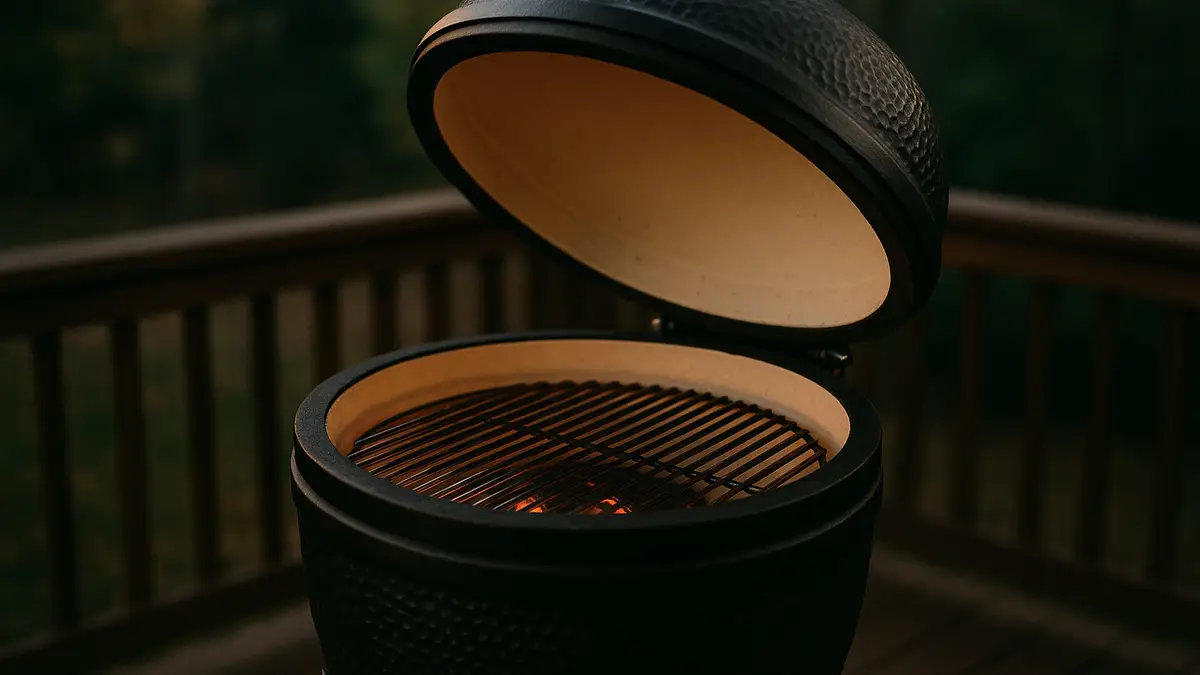
A kamado grill is a single purchase that replaces both your grill and your smoker, which is exactly why the sizing and material decision matters more here than on almost any other grill type. Buy too small and you’ll outgrow it in a season; buy too large and you’ll burn more charcoal than you need for a weeknight dinner.
What is a kamado grill?
A kamado grill is a thick-walled, egg-shaped charcoal cooker, traditionally ceramic, that holds heat with unusual stability across a huge temperature range, from a 700F sear to a 225F overnight smoke on the same unit. The name comes from a traditional Japanese clay cooking vessel; modern kamados are ceramic or enamel-coated steel, built around the same thick-wall principle.
What size kamado do you need?
| Size | Grate diameter | Feeds |
|---|---|---|
| Mini/compact | 13-15 inch | 1-2 people |
| Standard/large | 18-19 inch | 4-8 people (most popular) |
| XL | 24 inch | 15-20+ people |
The 18-19 inch standard/large size is the default recommendation for most buyers: it fits a full packer brisket, several racks of ribs, or a whole turkey, and it’s the size every major brand builds its flagship model around. Size down only for genuinely small households or patio space constraints, and size up only if you’re regularly cooking for a crowd or considering competition cooking.
Ceramic vs steel kamado: what’s the real difference?
Ceramic kamados hold heat the most evenly and retain it the longest per load of charcoal, which is the entire point of the design, but they’re heavy (often 200+ lbs for a standard size) and priced accordingly. Enamel-coated steel kamados, led by budget-friendly models like the Char-Griller Akorn, weigh far less and cost significantly less, trading some heat retention and long-term durability for accessibility. For occasional use or a first kamado, steel is a reasonable way in; for daily or competition use, ceramic’s heat stability pays for itself over time.
What should you expect to pay?
Budget steel ($200-400): Enamel-coated steel kamados in the mini or standard size cover an entry point into the category without ceramic pricing. Who this tier is not for: anyone planning years of heavy use, since steel kamados have a shorter realistic lifespan than ceramic.
Mid-range ceramic ($500-1,000): Entry ceramic kamados in the standard/large size, often from newer or secondary brands, deliver the real heat-retention benefit at a more accessible price than the flagship names. Who this tier is not for: buyers who specifically want the resale value and accessory ecosystem of a top-tier brand.
Premium ($1,000-2,000): Kamado Joe and Big Green Egg’s standard/large models sit here, with thick ceramic walls, better gasket systems, and the largest accessory ecosystems (heat deflectors, multi-level racks) in the category. This is the default pick for the competition-curious enthusiast persona.
XL/flagship ($1,500-2,500+): 24 inch XL models from the same top brands, sized for genuine large-gathering or competition cooking. Who this tier is not for: households under 8 people, where an XL grate mostly sits half empty and wastes charcoal relative to a standard size.
What accessories actually matter?
A heat deflector (sometimes called a plate setter) is close to essential for smoking, since it blocks direct flame and turns the kamado into an indirect-heat oven. A good gasket (the felt seal around the lid) keeps smoke and heat in; check replacement gasket availability before buying an off-brand model, since gaskets wear out over years of heat cycling. Multi-level cooking racks let you sear on one level and hold food warm on another, useful once you’re cooking multiple dishes in one session.
How does temperature control actually work on a kamado?
A kamado uses two adjustable vents, one at the bottom feeding air to the charcoal, one at the top controlling how fast smoke and heat exhaust, and the balance between them sets your cooking temperature. Open both wide for a hot sear near 700F; close both down to a crack for a steady 225F overnight smoke. It takes a few cooks to learn how your specific unit responds, since vent position that hits 250F on one kamado might run 275F on another depending on charcoal load and outdoor temperature. Most kamados also hold heat well enough in cold weather that winter cooking stays realistic, unlike thin-steel grills that struggle to hold temperature once it drops below freezing.
How long does a kamado actually last?
This is where ceramic earns its price difference most clearly. A well-maintained ceramic kamado with an intact gasket can realistically last 15-20+ years, since the ceramic body itself doesn’t rust or corrode the way steel does. Steel kamados, even enamel-coated ones, typically run a shorter realistic lifespan, especially in humid climates or without a cover, since any chip in the enamel coating exposes bare steel to rust. Factor this into the price comparison: a $1,200 ceramic kamado used for 15 years costs less per year than a $300 steel one replaced every 3-4.
Kamado or something else?
A kamado earns its price by doing two jobs (grill and smoker) in one unit, which is the whole case for it over a dedicated offset or a straight gas grill. If you’re still comparing across fuel types rather than sold on kamado specifically, our full kamado vs offset vs pellet vs gas comparison and gas vs charcoal grill breakdown cover the alternatives. And if premium ceramic pricing has you looking at the top of the market generally, best high-end grill brands rounds up where kamados sit next to luxury gas islands. For a budget-first view across every fuel type rather than kamados specifically, start with our best grill buying guide.
Frequently asked questions
Quick answers to what readers ask us most
What size kamado grill should I buy?
The 18-19 inch standard/large size fits most households, feeding 4-8 people and handling a full packer brisket. Go mini (13-15 inch) only for 1-2 person cooking, and XL (24 inch) only if you regularly cook for 15-20+ people.
Is a ceramic kamado better than a steel one?
Ceramic holds heat more evenly and retains it longer on a single load of charcoal, which is why it dominates the premium tier. Enamel-coated steel kamados cost less and are lighter, a reasonable tradeoff for occasional use.
How much charcoal does a kamado use?
Far less than a kettle grill for the same cook time, since the thick walls hold heat with minimal fuel. A single load can run 8-12+ hours at low-and-slow temperatures without refueling.
Is a kamado grill worth it over a regular gas or charcoal grill?
If you want one grill that both sears steaks and smokes a brisket, yes. If you mostly want fast weeknight grilling, see our gas vs charcoal comparison instead, since a kamado's versatility costs more upfront.